How to Choose Lodging Near Entertainment Districts
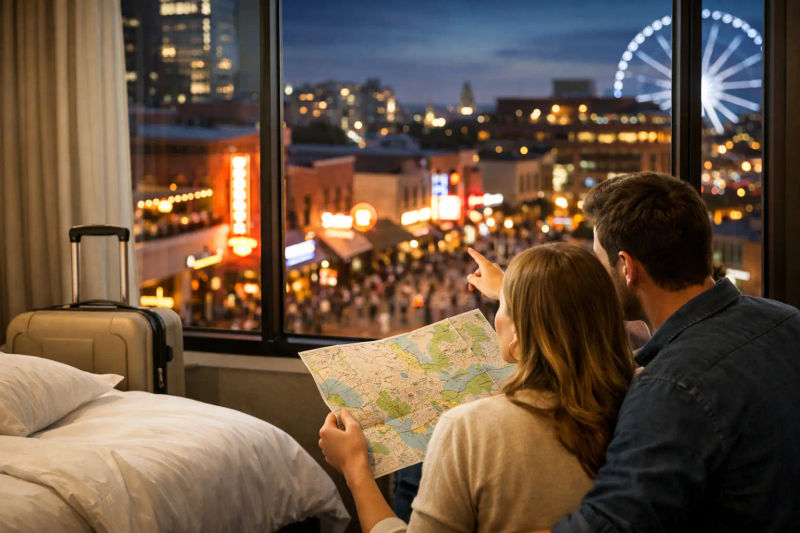
A great show ends, the restaurant tables fill, and suddenly everyone is trying to get across town at once. Choosing lodging near entertainment districts can turn that stressful final hour into an easy walk back to your room, rental, or hotel lobby. For a weekend built around live music, big-city dining, sports, festivals, or family attractions, where you stay shapes far more than your commute.
The best choice is not always the hotel closest to the brightest lights. It is the place that matches your plans, your travel party, and the kind of downtime you want between memorable outings. A downtown tower may put you steps from the action, while a nearby neighborhood stay can offer more space, quieter nights, and a better rate. The right answer depends on how you want your getaway to feel.
Why lodging near entertainment districts changes the trip
Entertainment districts bring the best parts of a destination into a compact area: theaters, arenas, restaurants, museums, riverwalks, cocktail bars, kid-friendly attractions, and seasonal events. Staying nearby means you can make the most of those hours when a destination feels especially alive - after a ballgame, before a matinee, or during an unplanned stop for dessert.
Convenience is the obvious benefit, but flexibility is the real advantage. When your lodging is close, you can return to freshen up before dinner, let younger travelers rest between activities, or drop off shopping bags before heading to a concert. You are less tied to parking garages, rideshare surge pricing, and the question of who is driving home.
This can be especially valuable in destinations with packed event calendars. Think of a theater weekend in New York, a music-filled getaway in Nashville, a sports trip to Cleveland, or a waterfront festival in Chicago. In each case, a centrally located stay makes it easier to enjoy the atmosphere instead of watching the clock.
There is a trade-off, of course. Prime locations may come with higher nightly rates, smaller rooms, street noise, and parking fees. Travelers who value a quiet morning or need room for a larger family may be happier one neighborhood away. The goal is not simply to book downtown. It is to book smart.
Start with the experience, not the hotel name
Before comparing properties, look at the trip on your calendar. Are you seeing a late concert? Traveling for a tournament? Bringing kids to an attraction-packed city? Planning a couples getaway centered on dining and nightlife? Your answer helps define what “near” should mean.
For a single evening event, a hotel within a 10- to 20-minute walk can be ideal, especially if the route is well lit and easy to navigate. For a long weekend with activities in several neighborhoods, access to public transit or quick rideshare pickup may matter more than being directly beside one venue.
Map your must-do stops first. Include the venue, restaurants you hope to try, daytime attractions, and the airport or highway route if relevant. Then look beyond a property's mileage. A hotel two blocks away may sit across a highway, rail line, or steep hill. A stay a half-mile farther out may have a direct pedestrian route and feel much easier.
Check the event calendar before you reserve
Big events can change a district overnight. A major concert, college football game, convention, holiday market, or local festival often raises rates and fills nearby rooms quickly. It can also make road closures and parking more complicated.
If your dates are flexible, compare a few adjacent weekends. Shifting a Friday-to-Sunday getaway by one week may open up better lodging choices and more favorable prices. If the event is the reason for your trip, book early and confirm venue details before choosing a nonrefundable rate.
Match the lodging style to your travel party
A lively district can work for almost any kind of getaway, but not every property works for every traveler. Couples may prioritize a boutique hotel with walkable restaurants and late-night energy. Families may prefer a suite, a pool, complimentary breakfast, or a vacation rental with a kitchen. Friends traveling together might get more value from a larger rental just outside the center, particularly when everyone wants separate bedrooms.
Business-friendly features can matter on leisure trips, too. Reliable Wi-Fi, a comfortable lobby, luggage storage, and an on-site restaurant make a short stay feel easier. If you are arriving before check-in or leaving after an afternoon game, those practical details can save the day.
Pay attention to the environment around the property as well. A room facing a popular nightlife block can be exciting for travelers who plan to stay out late, but less appealing for light sleepers or families with young children. Read recent guest comments for specifics about sound, elevators, street activity, and parking rather than relying on a general neighborhood description.
Compare the full cost of a close-in stay
The nightly price is only one part of the lodging decision. Downtown and entertainment-district properties may charge for parking, destination fees, valet service, or pet stays. A less central hotel with free parking can become the better value, even after a few rideshare trips.
On the other hand, staying close can reduce spending in ways that do not show up in the room rate. Walking to dinner means no parking fee. Returning to your room between events means fewer impulse purchases and fewer long waits for transportation. A hotel with breakfast may also simplify busy mornings when you want to be at the museum, trail, or attraction soon after it opens.
Consider these four costs together before booking:
- The room rate, including taxes and required property fees
- Parking, transit, and rideshare costs for the full trip
- The value of included features such as breakfast, a kitchen, or a pool
- The time and convenience gained by being close to your plans
A slightly higher rate can be worthwhile when it gives your group more freedom. But if a property farther out offers significantly more space or saves enough for an extra attraction, that may be the better vacation move.
Look beyond the main strip
The most recognizable entertainment district is only one option. Adjacent neighborhoods often offer a more local feel, better restaurant variety, and lodging that is less expensive than the center of the action. In cities across Ohio, Pennsylvania, Tennessee, Michigan, North Carolina, and beyond, a short walk or quick transit ride can place you near the fun without putting you in the middle of the late-night crowd.
This approach is especially useful for repeat visitors. If you have already stayed in the busiest downtown block, try a nearby arts district, historic neighborhood, waterfront area, or university district. You may find independent coffee shops, local galleries, parks, and a different side of the destination between headline events.
Just confirm how you will get around after dark. Look for nearby transit stops, straightforward parking, active sidewalks, and reputable transportation options. If walking is part of your plan, check the actual route at the times you expect to use it, not only the distance on a map.
Make arrival and departure easy
Entertainment districts are designed for activity, which can make check-in day more complicated. Ask about parking access, loading areas, and whether the hotel can hold bags if you arrive early. If you are staying in a rental, review check-in instructions carefully and note any building entry codes, garage rules, or quiet-hour policies.
For road trips, consider whether you will need your car during the stay. If every planned stop is walkable, paying to park it for two days may still be simpler than moving it repeatedly. If you plan to explore nearby towns, scenic drives, or regional attractions, a property with easy garage access can be worth prioritizing.
Turn a convenient stay into a better getaway
Once your lodging is set, leave room for a little spontaneity. Book the major event, then let the neighborhood fill in the rest. Ask the front desk or host where locals go for breakfast, which attraction is best early in the day, or where to find a quieter drink after the crowd clears. Those small discoveries often become the stories you bring home.
GuestQuest can help travelers move from a destination idea to lodging, attractions, events, and visitor information in one planning flow. Whether you are chasing live music, a family weekend, a favorite team, or a new food scene, start with what you want to experience and choose a stay that keeps the best moments comfortably within reach.
The perfect room is not always the closest pin on the map. It is the one that lets you step out, enjoy the energy, and return at the end of the night feeling like the trip was easy from start to finish.